Book Your Consultation

Glaucoma Care in Saskatoon

Glaucoma often has no warning signs until vision has already been lost. The good news is that regular checks can find it early, and treatment can slow or prevent further damage. At Conlon Eye Institute (CEI) in Saskatoon, our ophthalmologists and team help patients understand their glaucoma and keep it under control over the long term.

What is glaucoma?

Glaucoma is a group of eye diseases that damage the optic nerve, the “cable” that carries signals from the eye to the brain. Damage is often linked to pressure inside the eye being too high for that eye, but glaucoma can also happen when eye pressure is in the normal range (normal-tension glaucoma).

There are two main types:

  • Open-angle glaucoma is the most common type. It develops slowly and without pain. Side (peripheral) vision is usually affected first, so many people do not notice a problem until damage is advanced.
  • Angle-closure glaucoma is less common. The eye’s drainage angle becomes blocked. It can build slowly, or it can come on suddenly as an emergency.

Vision lost to glaucoma is permanent. Treatment cannot bring it back, but it can slow or prevent further loss. That is why early detection and steady follow-up matter so much.

Who is at risk?

Anyone can develop glaucoma, but your risk is higher if you:

  • Are over 60 (risk rises with age)
  • Have a parent, brother or sister with glaucoma
  • Have high eye pressure (ocular hypertension)
  • Have diabetes or high blood pressure
  • Are very nearsighted or farsighted
  • Have had an eye injury or eye surgery
  • Use steroid medicines (drops, pills, inhalers or creams) for a long time
  • Are of African, Asian or Indigenous ancestry (some types are more common in certain groups)

If any of these apply to you, ask your optometrist how often you should have your eye pressure and optic nerve checked.

Symptoms

Open-angle glaucoma usually has no symptoms early on. As it progresses you may notice:

Patchy blind spots in your side vision

Bumping into things or missing objects off to the side

In late stages, “tunnel vision”

Angle-closure glaucoma can cause sudden symptoms (see the box below).

When to be seen urgently

A sudden attack of angle-closure glaucoma is an emergency that can cause permanent vision loss within hours. Get help the same day if you have:

  • Sudden, severe eye pain or a red eye
  • Sudden blurred vision
  • Rainbow-coloured halos around lights
  • Headache, nausea or vomiting along with eye pain

During office hours (Monday to Friday, 7 am to 4 pm), call us at 306-244-4111. After hours, go to the nearest emergency department right away. For advice, you can also call HealthLine 811 (24/7). In a life-threatening emergency, call 911.

How glaucoma is diagnosed

There is no single test for glaucoma. An eye doctor looks at several things together, and repeats key tests over time to see whether anything is changing. Common tests include:

  • Eye pressure check (tonometry) – measures the pressure inside the eye
  • Optic nerve exam – looking at the nerve through the pupil, often after dilating drops
  • Gonioscopy – checking whether the eye’s drainage angle is open or narrow
  • Visual field test – maps your side vision to find blind spots
  • OCT scan – a quick, non-contact scan that measures the nerve fibre layer
  • Corneal thickness (pachymetry) – helps interpret pressure readings

Treatment options

The goal of treatment is to lower eye pressure to a level that protects your optic nerve. Your plan depends on the type of glaucoma, how advanced it is, and your health.

  • Eye drops – usually the first treatment. They lower pressure by reducing fluid made in the eye or helping it drain. Drops need to be used every day, as prescribed, even when your vision feels fine.
  • Selective laser trabeculoplasty (SLT) – a gentle laser treatment, done in our clinic, that helps fluid drain from the eye in open-angle glaucoma. SLT may reduce or delay the need for drops, but many people still need drops afterward, and the effect can wear off over time.
  • Laser iridotomy – for narrow or closed drainage angles, a laser makes a tiny opening in the iris so fluid can flow more freely. This is also done in our clinic.
  • MIGS with cataract surgery – for suitable patients who also need cataract surgery, our ophthalmologists can place a tiny drainage device (minimally invasive glaucoma surgery, or MIGS) during the same operation to help lower eye pressure. Cataract surgery itself may also help in some types of angle-closure glaucoma.
  • Other glaucoma surgery – we do not perform standalone glaucoma surgery at CEI. If your eye pressure needs a different type of surgery, we can help coordinate a referral to an appropriate specialist.

All treatments aim to slow or prevent further vision loss; none can restore vision already lost. Each has benefits and risks, which your ophthalmologist will discuss with you.

Living with glaucoma and follow-up

Glaucoma is a lifelong condition, but most people who keep up with treatment keep useful vision for life.
  • Use drops exactly as prescribed. Ask for tips if you have trouble getting drops in, or if they sting or cause side effects.
  • Keep every follow-up visit. Your pressure, optic nerve and visual fields will be rechecked regularly, often every 3 to 12 months.
  • Tell all your doctors you have glaucoma, especially before starting steroids or new medicines.
  • Encourage family members to get checked, since glaucoma runs in families.
  • Driving: advanced glaucoma can affect side vision needed for driving. Your eye doctor can advise you about vision standards.
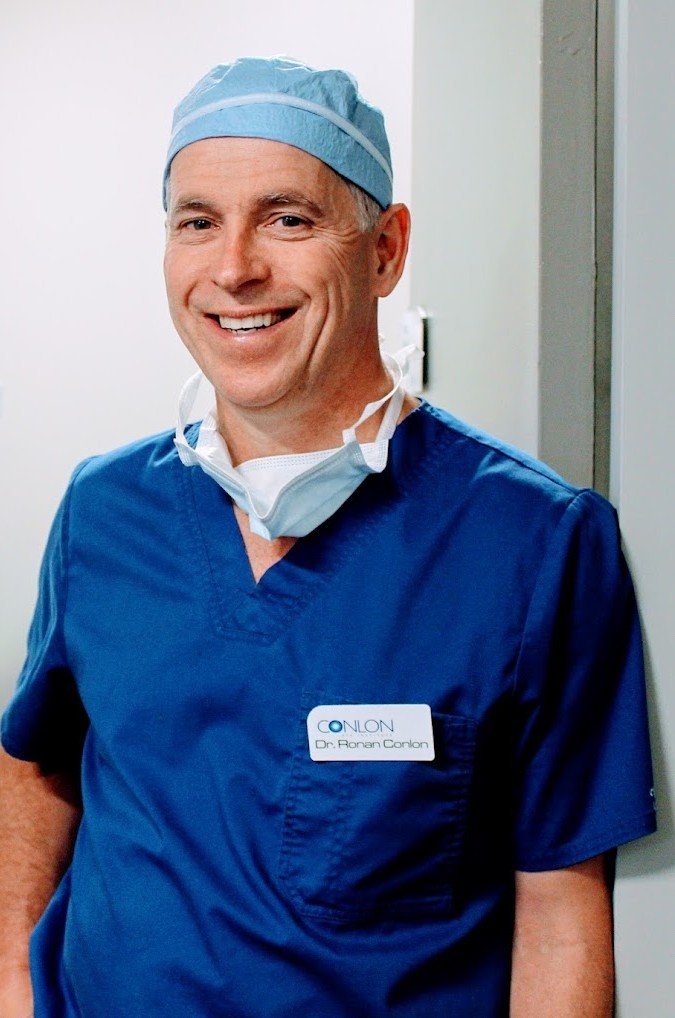
Dr. M. Ronan Conlon

Referrals

We welcome referrals from optometrists and family doctors in Saskatoon and across Saskatchewan.

Conlon Eye Institute · Medical Arts Building, 341-750 Spadina Crescent East, Saskatoon · 306-244-4111 · Monday to Friday, 7 am to 4 pm

Meet Dr. Conlon →

Frequently asked questions

Can glaucoma be cured?

No. Vision lost to glaucoma cannot be restored. But treatment can slow or prevent further vision loss, and many people keep good vision for life with regular care.

If my eye pressure is normal, can I still have glaucoma?

Yes. Normal-tension glaucoma damages the optic nerve even when pressure readings are normal. That is why the optic nerve and visual fields are checked too, not just pressure.

Will I have to use eye drops forever?

Many people do. Some patients can reduce or delay drops after laser treatment, but most need lifelong monitoring. Never stop drops without talking to your eye doctor.

How often should I be checked?

It depends on your risk and how stable your glaucoma is. Many patients are seen every 3 to 12 months. Your doctor will set a schedule for you.

Book your consultation

Have questions about your eyes? Book your consultation with our ophthalmologists at Conlon Eye Institute: call 306-244-4111, Monday to Friday, 7 am to 4 pm.

Book Your Consultation

← Back to eye conditions