AdvancedSurf Laser (PRK), LASIK and refractive lens exchange, explained clearly.
The right option depends on your prescription, your corneas, your age and how you use your eyes. We assess your eyes in detail and recommend what suits you, or tell you honestly if nothing does.
Laser vision correction began on the surface of the eye, moved under a flap, and has now come back to the surface in a more advanced form.
For patients who are suitable for laser vision correction, Dr. Conlon recommends AdvancedSurf Laser (PRK) for most patients. Surface laser has a long track record, and in Dr. Conlon’s experience it offers a high degree of safety.
The main reason is that ASL (PRK) doesn’t involve cutting a flap in the cornea. With no flap, flap-related problems, such as a flap shifting after an eye injury, wrinkles in the flap or cells growing under it, can’t happen.
Because no flap is cut, more of the cornea’s natural strength is preserved. This lowers the risk of the cornea weakening and bulging over time (called ectasia), a rare but serious complication after LASIK.
The trade-off is a slower, less comfortable first few days. LASIK remains a good option for some patients, and we’ll talk through both with you.
Often considered for: most nearsighted and astigmatic prescriptions, including thinner corneas and active lifestyles or contact sports.
Often considered for: some adults with a stable prescription and healthy corneas of adequate thickness.
Often considered for: people over about 45, farsightedness, or early near-vision changes.
All laser vision correction carries risk, including dry eye, glare or halos, under- or over-correction, infection and, rarely, loss of vision. ASL (PRK) also carries a small risk of corneal haze, and you’ll use eye drops for a period while your eye heals. Your individual risks are discussed at your consultation.
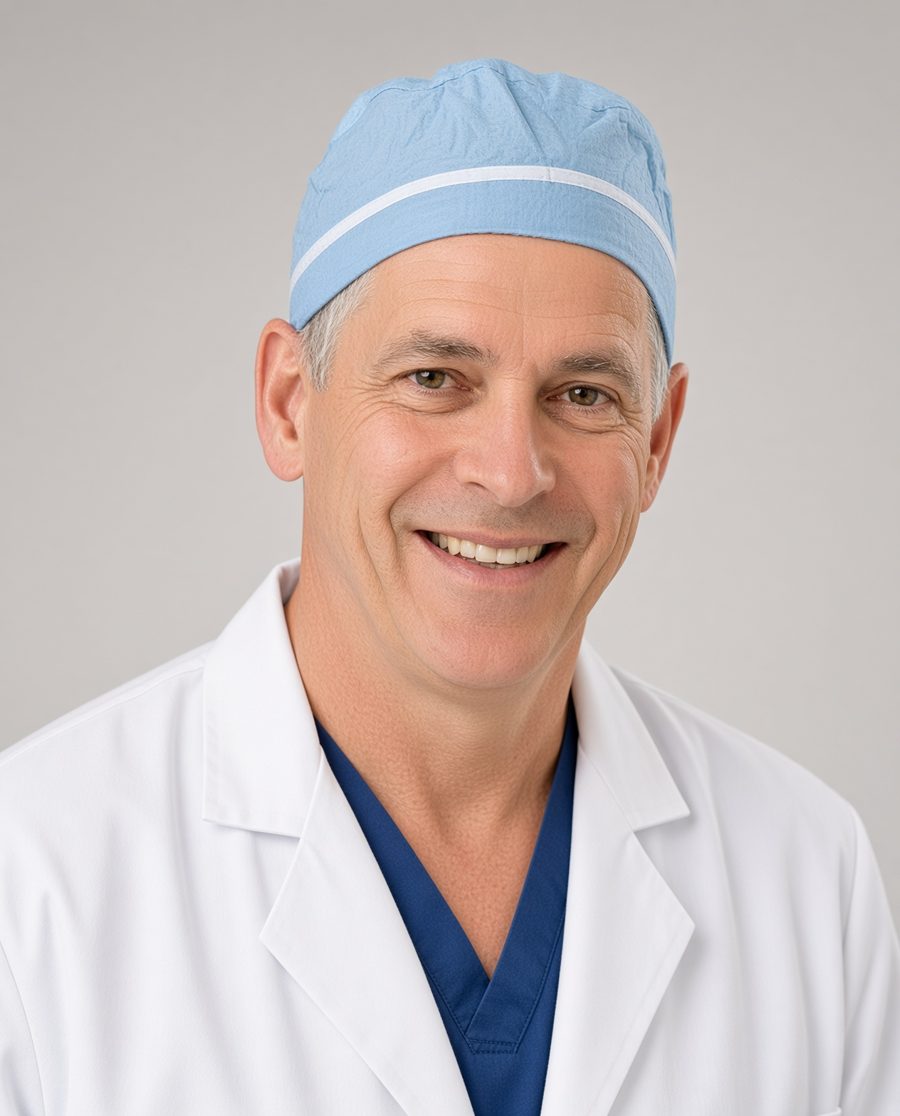
Dr. M. Ronan Conlon, Medical Director, has 30 years of experience in refractive surgery and more than 40,000 procedures.
For referring doctors: Dr. Conlon recommends AdvancedSurf Laser (PRK) for most suitable patients. With no flap, flap complications can’t occur, and more corneal strength is preserved, which lowers the risk of ectasia. LASIK remains an option for some patients.
Meet Dr. Conlon →Fees depend on the procedure and are listed on our pricing page; financing options may be available.
Suitability depends on a full assessment, and surgery is never done on the same day as your consultation.
Consultations are free.
Book a consultation