


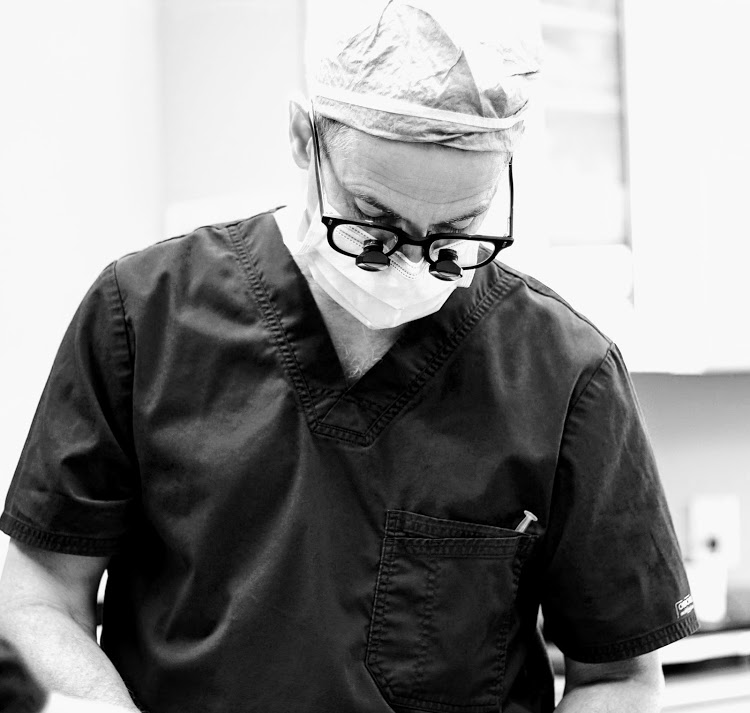
Illustrative stock photo — not Conlon Eye Institute staff.
You had cataract surgery or refractive lens exchange (RLE) — lens replacement — and vision was brighter. Months or years later, haze and glare return. Has the cataract come back?
Usually no. A cataract cannot grow back. Posterior capsule opacification (PCO) is clouding of the thin capsule that holds the artificial lens — sometimes nicknamed a “secondary cataract,” though it is not a new cataract in the implant. The American Academy of Ophthalmology describes YAG laser capsulotomy (posterior capsulotomy) as a quick office laser that opens the cloudy capsule so light can pass clearly again.
Key Takeaways
- After cataract surgery or lens replacement (RLE), the artificial lens sits in the eye’s natural capsule. That capsule can turn hazy over time (PCO).
- PCO is not the cataract returning and is not usually a sign the surgery “failed.”
- YAG laser capsulotomy makes a small opening in the cloudy capsule; it does not remove or replace the lens.
- Most people notice clearer vision within about a day or two once dilation wears off, though healing and floaters vary.
- Rare risks include pressure rise, inflammation and retinal problems — know the urgent warning symptoms below.
What Is Posterior Capsule Opacification?
During cataract surgery or RLE, the surgeon removes the natural lens and places an intraocular lens (IOL) inside the clear capsule that once held it. Over time, cells on that capsule can grow or the capsule can wrinkle, leaving a frosted-glass effect behind the IOL. Light scatters. Vision blurs or glares — much like the original cataract felt, which is why the nickname “secondary cataract” stuck.
It can happen after cataract surgery (when the lens was cloudy) or after elective RLE (when the lens was exchanged mainly to reduce glasses dependence). The capsule biology is similar either way.

Illustrative stock photo — hazy vision metaphor; not a clinical photograph of PCO.
Signs That Suggest PCO
PCO tends to develop gradually:
- Blurry or hazy vision
- Glare or halos, especially at night
- Trouble with fine print
- Colours looking duller
- A sense that glasses are dirty when they are clean
Other problems can feel similar. If you notice these changes after cataract surgery or RLE, book your consultation so our ophthalmologists can check the capsule and the rest of the eye.
Who Is a Candidate for YAG Capsulotomy?
You may be a candidate when:
- The capsule is cloudy enough to affect vision or glare
- The IOL is otherwise well positioned
- The view allows the laser to be aimed safely
- There is no active problem that makes laser unwise right now (for example, some cases of active macular swelling are deferred)
You may need a different plan if corneal haze blocks the laser view, you cannot fixate safely, or another diagnosis explains the blur. Candidacy is individual — the same after cataract surgery or after RLE.
What a YAG Visit Is Usually Like
AAO and other patient guides describe a short outpatient visit:
- Before. Vision and often eye pressure are checked. Dilating drops open the pupil; numbing drops may be used.
- During. You sit at a laser similar to the exam microscope. A contact lens may rest on the eye to steady focus. The laser creates a small opening in the cloudy posterior capsule behind the IOL. You may see lights or hear clicks. Laser time is typically only a few minutes.
- After. Pressure may be rechecked. Many people go home soon afterward. A driver is wise while pupils are dilated. Anti-inflammatory drops may be prescribed for a few days.
There is no incision and no lens exchange. Your IOL stays in place.
“YAG laser for secondary cataract is one of the most satisfying treatments I do. It takes a few minutes, it’s comfortable for most people, and many patients notice the difference by the next day. It’s a common, routine treatment at our clinic,” says Dr. Conlon.

Illustrative stock photo — not a clinic patient portrait.
Benefits, Limits and Risks
Benefits: clearer vision when PCO was the cause; quick office procedure; usually one treatment per eye is enough once the capsule is opened.
Limits: YAG does not fix blur from macular disease, significant dry eye or the wrong glasses prescription. It does not “upgrade” the IOL power. Floaters are common for a while afterward.
Risks (conservative list from AAO-style patient guidance): temporary pressure rise; inflammation; swelling in the retina; rarely, retinal tear or detachment; rarely, issues with IOL position. Your surgeon will discuss risks that apply to you.
Urgent symptoms — call the same day
After YAG, mild new floaters can be normal. Seek prompt care if you notice:
- A sudden shower of new floaters
- Flashes of light
- A shadow, curtain or grey patch across vision
- Significant pain or a sharp drop in vision
“Some new floaters after YAG are normal. But a sudden shower of them, flashes or a curtain over your vision is different. That needs a same-day call, because we want to check your retina,” says Dr. Conlon.
Cataract Surgery vs Lens Replacement (RLE): Same Capsule Story
Cataract surgery removes a cloudy lens; refractive lens exchange (RLE) uses the same family of operation mainly to reduce glasses dependence. Both place an IOL in the capsular bag, so PCO can appear later. Haze after RLE does not mean the lens “wore out.”
Preparing for the Day and Recovering
Plan a driver if pupils will be dilated. Vision may be soft for a few hours afterward. Floaters often settle; a sudden storm of floaters with flashes or a curtain needs same-day care.
Frequently Asked Questions
Did my cataract grow back after cataract surgery or RLE?
No. The natural lens is gone. PCO is clouding of the capsule behind the artificial lens. The nickname “secondary cataract” is common but technically misleading.
Can PCO happen after lens replacement (RLE) as well as after cataract surgery?
Yes. Both procedures leave an IOL in a capsule that can opacify later.
Does YAG hurt?
The eye is numbed with drops. Most people feel little more than light pressure from a contact lens and see flashes. Comfort varies; we do not promise a completely sensation-free visit.
Will PCO come back after YAG?
Once a clear opening is made, that cloudy membrane does not typically “grow back” over the opening the same way. New visual problems afterward need a fresh exam.
Will I need new glasses?
Often not because of the YAG itself, but clearer vision can make an old prescription feel worth updating. Your optometrist or our team can advise.
Book Your Consultation
If vision has become hazy again after cataract surgery or lens replacement (RLE), book your consultation: call our Saskatoon office at 306-244-4111, Monday to Friday, 7 am to 4 pm. Conlon Eye Institute is in the Medical Arts Building, 341-750 Spadina Crescent East, Saskatoon, SK S7K 3H3.
References
- American Academy of Ophthalmology, EyeSmart. What is a posterior capsulotomy? https://www.aao.org/eye-health/diseases/what-is-posterior-capsulotomy
- Cleveland Clinic. YAG laser capsulotomy (posterior capsulotomy) — patient overview. https://my.clevelandclinic.org/health/procedures/yag-laser-capsulotomy-posterior-capsulotomy
- Canadian Ophthalmological Society — patient information on cataracts (general background)
About the Author
Dr. M. Ronan Conlon has practised ophthalmology in Saskatoon since 1994. He completed fellowship training in ocular pathology at Harvard University and in oculoplastic surgery at the University of Iowa. In 1996 he brought laser vision correction technology to Canada from Germany, and he specializes in oculoplastic surgery, LASIK, ASL (PRK) and refractive cataract surgery. With the establishment of the Conlon Eye Institute, Dr. Conlon has drawn on decades of experience in LASIK, RLE surgery, refractive cataract surgery, and oculoplastic surgery. He has also served as Head of Ophthalmology and Chief of Staff with the Saskatchewan Health Authority.
The information on this page should not be used in place of information provided by a doctor or specialist. To learn more, read our Privacy Policy and Editorial Policy pages.