
Illustrative stock photograph; not a CEI patient, treatment result or clinic equipment.
Somewhere in your 40s, it usually starts. You hold your phone a little farther away to read it. Restaurant menus seem to be printed smaller than they used to be. Before long, there are reading glasses in the car, by the bed and on top of your head.
This is presbyopia, the natural, age-related loss of close-up focusing. It happens to everyone eventually. For some people, an approach called monovision can greatly reduce the need for reading glasses. Here’s how it works, who tends to do well with it, and the trade-offs to consider before you decide.
Key Takeaways
- Monovision corrects one eye for distance and the other for near. Your brain learns to use the right eye for the task.
- It can be done with contact lenses, LASIK, cataract surgery or RLE. Trying it first with contact lenses is the best way to know if it suits you.
- Many people adapt well, but monovision can slightly reduce depth perception and sharpness at night. It isn’t the right fit for everyone.
Why Close-Up Vision Changes With Age
Inside your eye is a natural lens that changes shape to focus on things up close. When you’re young, it’s soft and flexible. With age, it gradually stiffens, so it can’t focus up close as easily. That’s presbyopia. It isn’t a disease, and it happens even to people who have never needed glasses.
How Monovision Works
With monovision, your eye doctor sets one eye, usually your dominant eye, for distance vision. The other eye is set for near or intermediate vision, such as reading or using a computer.
That may sound strange, but your brain is very good at adapting. Over time, it learns to pay attention to the eye that’s in focus for whatever you’re looking at. When you’re driving, you rely on your distance eye. When you’re reading, your near eye takes over.
Many surgeons use a milder version, sometimes called blended vision or mini-monovision. The near eye is set for arm’s length tasks rather than very close reading. This often makes the difference between the eyes easier to get used to, though you may still want light readers for very fine print.

Ways to Get Monovision
Contact Lenses
Monovision with contact lenses is the easiest way to try it. Your optometrist can fit you with lenses set for distance in one eye and near in the other. Wearing them for a while during your normal routine gives you a real feel for how it works before you consider surgery.
LASIK or ASL (PRK)
Laser vision correction can set one eye for distance and the other for near. For people in their 40s and 50s who already need glasses for distance, this can reduce the need for both distance and reading glasses.
Cataract Surgery and RLE
For people having cataract surgery, or considering lens replacement (RLE), the lens implants can be chosen to create monovision. Because the natural lens is replaced, a cataract can’t form in that eye later, although the capsule behind the implant can sometimes turn hazy and need a quick laser treatment. Cataract surgery and RLE offer other ways to reduce dependence on reading glasses too, such as multifocal or extended depth of focus lenses.
Who Does Well With Monovision?
People who tend to adapt well often:
- Have already worn monovision contact lenses and liked them
- Want to read, use a phone and see the dashboard without reaching for glasses
- Are comfortable with good, rather than perfect, vision at every distance
- Don’t mind wearing glasses occasionally for certain tasks
Who Might Prefer Another Option
Monovision may be less suitable if you:
- Do a lot of night driving or rely on very sharp distance vision in both eyes
- Need fine depth perception for work or hobbies, such as some sports, flying or precision trades
- Have a large difference in vision between your eyes already, or certain eye conditions
- Strongly prefer to see equally clearly with both eyes
The Trade-Offs
Monovision is a compromise. It gives you a wider range of vision without glasses, but each eye works a little harder on its own. Some things to know:
- Depth perception may be slightly reduced, especially at first.
- Night vision can feel less crisp, because only one eye is fully focused for distance.
- Adjustment takes time. For most people, this is a few weeks. Some take longer.
- You may still need glasses sometimes, for long drives at night or very fine print.
- It can be adjusted. If monovision doesn’t suit you, it can often be changed later, though that may mean wearing glasses or having another procedure.
What to Expect at Your Consultation
At your consultation in Saskatoon, we’ll check your eyes in detail, find out which eye is dominant and talk about how you use your eyes every day. We’ll ask about work, driving, screens and hobbies. If monovision seems like a good option, we may suggest you try it with contact lenses first, with help from your optometrist. Together, we’ll decide whether monovision, another option, or no surgery at all is the best choice for you.
Frequently Asked Questions
How do I know which eye is dominant?
We’ll test this at your consultation. It only takes a moment and helps decide which eye to set for distance.
Is monovision permanent?
With surgery, the change is meant to be long-lasting. It can often be adjusted later if needed. That’s why trying it with contact lenses first is so helpful.
Will I still need reading glasses?
Many people use them much less, or rarely at all. Some still like reading glasses for very small print or long periods of reading.
Can I have monovision with cataract surgery?
Yes. Lens implants can be chosen to create monovision. We’ll talk about this and other lens options at your cataract assessment.
Book Your Consultation
If you’re tired of hunting for your reading glasses, we’d be glad to talk about whether monovision, lens replacement (RLE) or another option suits you. Book your consultation: call our Saskatoon office at 306-244-4111, Monday to Friday, 7 am to 4 pm. Conlon Eye Institute is in the Medical Arts Building, 341-750 Spadina Crescent East, Saskatoon, SK S7K 3H3.
References
- American Academy of Ophthalmology. What Is Presbyopia? https://www.aao.org/eye-health/diseases/what-is-presbyopia — supports age-related loss of near focus and monovision as an option that requires adaptation.
- American Academy of Ophthalmology. LASIK — Laser Eye Surgery. https://www.aao.org/eye-health/treatments/lasik — supports monovision LASIK and trade-offs such as reduced depth perception.
- Canadian Ophthalmological Society (See the Possibilities). Cataract surgery patient guide. https://www.seethepossibilities.ca/wp-content/uploads/2025/02/24245_STP_Cataracts2024_EN_REL_C00_00_.pdf — supports lens implant options, including monovision with implants.
About the Author
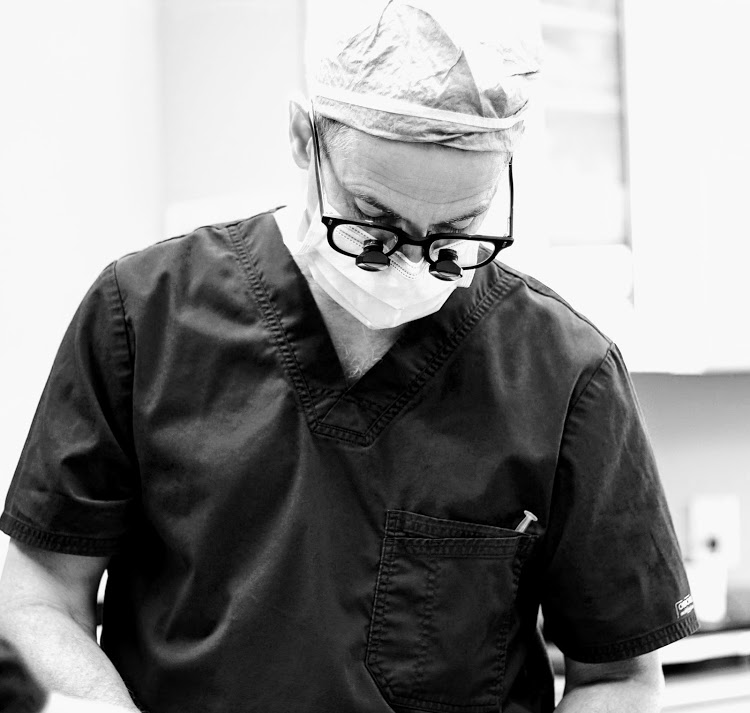
Dr. M. Ronan Conlon has practised ophthalmology in Saskatoon since 1994. He completed fellowship training in ocular pathology at Harvard University and in oculoplastic surgery at the University of Iowa. In 1996 he brought laser vision correction technology to Canada from Germany, and he specializes in oculoplastic surgery, LASIK, ASL (PRK) and refractive cataract surgery. With the establishment of the Conlon Eye Institute, Dr. Conlon has drawn on decades of experience in LASIK, RLE surgery, refractive cataract surgery, and oculoplastic surgery. He has also served as Head of Ophthalmology and Chief of Staff with the Saskatchewan Health Authority.
The information on this page should not be used in place of information provided by a doctor or specialist. To learn more, read our Privacy Policy and Editorial Policy pages.