

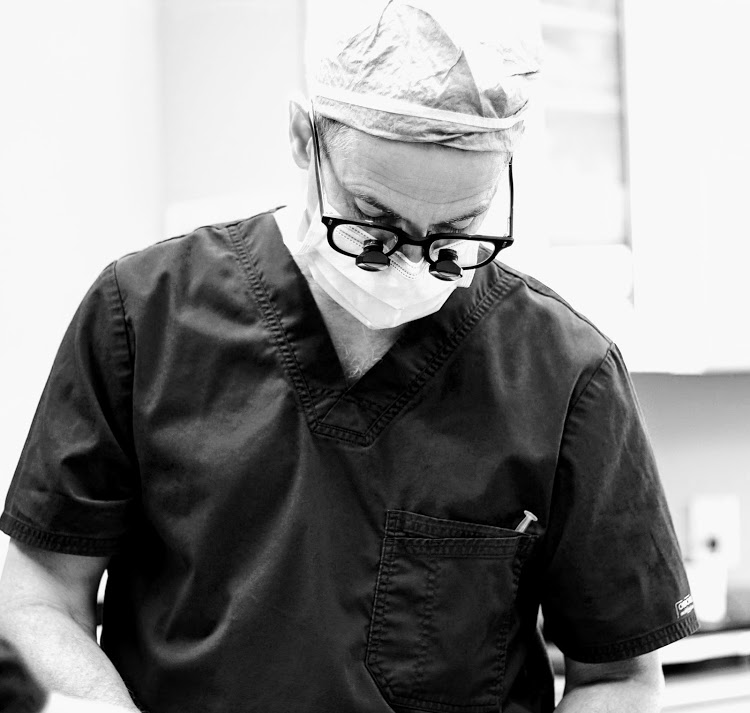
Illustrative stock photograph; not a CEI patient, treatment result or clinic equipment.
Cataract surgery has two goals. The first is to remove the cloudy lens so you can see clearly again. The second, which matters more and more to patients, is to choose a new lens implant that gives you the vision you want afterward, whether that’s clear distance vision, less reliance on glasses, or both.
Choosing the right lens power is a big part of reaching that second goal. The ORA System is one tool that helps. It takes measurements of your eye during surgery, in real time, to help your surgeon confirm the lens choice. Here’s how it works, who benefits most and what you’ll notice on the day.
Key Takeaways
- Before cataract surgery, we measure your eye carefully to choose the power of your new lens. The ORA System adds a second set of measurements taken during surgery itself.
- These live measurements can help confirm lens power and the alignment of lenses that correct astigmatism.
- ORA can be especially helpful for people with astigmatism or who’ve had LASIK, AdvancedSurf Laser (PRK) or other refractive surgery in the past.
How Lens Power Is Usually Chosen
Every cataract surgery starts with measurements. Before your surgery date, we measure the length of your eye, the curve of your cornea and other details. These numbers go into formulas that predict which lens power will focus light properly on your retina.
For most eyes, these formulas work very well. But some eyes are harder to predict. If the cornea has been reshaped by laser vision correction, for example, the usual formulas can be less accurate. Astigmatism adds another layer, because lenses that correct it need to be placed at a precise angle.
What the ORA System Does
ORA stands for Optiwave Refractive Analysis. It’s a device attached to the surgical microscope that measures how light travels through your eye. This is called intraoperative aberrometry, which simply means measuring the eye’s focusing during the operation.
Here’s the key idea. Once your cloudy natural lens has been removed, but before the new lens goes in, ORA takes a reading of your eye. This gives your surgeon live information about your eye in the operating room, rather than relying only on measurements taken weeks earlier.
Your surgeon can use these readings to:
- Confirm, or fine-tune, the power of the lens implant
- Check the alignment of a toric lens, which corrects astigmatism
- Help decide whether any small adjustment would improve the result
The final decision always rests with your surgeon. ORA is a guide that adds information, not a replacement for careful planning and experience.

Who Benefits Most From ORA?
ORA can be used in many cataract surgeries, but it tends to add the most value for certain patients.
People Who’ve Had LASIK, ASL (PRK) or RK
Laser vision correction and older procedures like radial keratotomy (RK) change the shape of the cornea. This makes standard lens calculations less predictable. Live measurements can help your surgeon choose a lens power that suits your eye as it is now.
People With Astigmatism
Toric lenses correct astigmatism, but only if they’re lined up at the right angle. ORA can help confirm that alignment during surgery.
People Choosing Premium IOLs
If you’re investing in a lens designed to reduce your need for glasses, such as a toric or multifocal lens, accuracy matters even more. ORA helps your surgeon aim as closely as possible for the result you’re hoping for.
What You’ll Notice on the Day
For most patients, ORA is barely noticeable. Cataract surgery is usually done with numbing drops and often light sedation to help keep you comfortable. When ORA takes a reading, you may be asked to look at a light for a few seconds. You might see bright light or colours, which is normal during cataract surgery.
Taking the measurements adds only a short time to the procedure. Recovery after surgery is the same as for any other cataract surgery.
Lens Planning at Our Clinic
Refractive cataract surgery, which combines cataract removal with a lens chosen to reduce your reliance on glasses, is done only at Conlon Eye Institute. Standard cataract surgery is performed at Prairieview. Our surgeons have used the ORA System in refractive cataract surgery, including in April 2025. At your assessment, we’ll talk about your goals, your lens options and whether ORA or other measurements make sense for your eyes.
If you’d like to learn more about lens options, read our posts on the science behind refractive cataract surgery and advances in intraocular lenses.

What ORA Can’t Do
It’s worth being realistic. ORA improves the information your surgeon has, but it can’t guarantee perfect vision without glasses. Healing varies from person to person, and other parts of the eye, like the retina and the tear film, also affect how clearly you see. Some people may still want glasses for certain tasks, and a small number may need a minor touch-up later. We’ll talk honestly about what to expect for your eyes.
Frequently Asked Questions
Is ORA used in every cataract surgery?
Not necessarily. It’s most useful for certain eyes, such as those with astigmatism or a history of refractive surgery. Your surgeon will discuss whether it makes sense for you.
Does ORA make surgery take longer?
Only a little. The readings take a short time and don’t change how the rest of the surgery or your recovery goes.
I had LASIK years ago. Can I still have good results after cataract surgery?
Yes. Previous LASIK makes lens calculations more challenging, and that’s exactly where tools like ORA can help. Let us know about any past eye surgery, and bring any old records you have.
What does Saskatchewan’s health plan cover?
Standard cataract surgery is covered by the province. Lens upgrades and refractive cataract surgery have additional costs. We’ll explain in writing what applies to your plan at your assessment.
Book Your Consultation
If you have a cataract and want to learn more about your lens options, including refractive cataract surgery or lens replacement (RLE) for people without a cataract, our team can help. Book your consultation: call our Saskatoon office at 306-244-4111, Monday to Friday, 7 am to 4 pm. Conlon Eye Institute is in the Medical Arts Building, 341-750 Spadina Crescent East, Saskatoon, SK S7K 3H3.
References
- EyeWiki (American Academy of Ophthalmology). Intraoperative Aberrometry. https://eyewiki.org/Intraoperative_Aberrometry — supports how intraoperative wavefront aberrometry measures the aphakic eye during surgery, toric alignment use, and its role after prior refractive surgery.
- American Academy of Ophthalmology. What Are Cataracts? https://www.aao.org/eye-health/diseases/what-are-cataracts — supports general cataract surgery and lens implant information.
About the Author
Dr. M. Ronan Conlon has practised ophthalmology in Saskatoon since 1994. He completed fellowship training in ocular pathology at Harvard University and in oculoplastic surgery at the University of Iowa. In 1996 he brought laser vision correction technology to Canada from Germany, and he specializes in oculoplastic surgery, LASIK, ASL (PRK) and refractive cataract surgery. With the establishment of the Conlon Eye Institute, Dr. Conlon has drawn on decades of experience in LASIK, RLE surgery, refractive cataract surgery, and oculoplastic surgery. He has also served as Head of Ophthalmology and Chief of Staff with the Saskatchewan Health Authority.
The information on this page should not be used in place of information provided by a doctor or specialist. To learn more, read our Privacy Policy and Editorial Policy pages.