
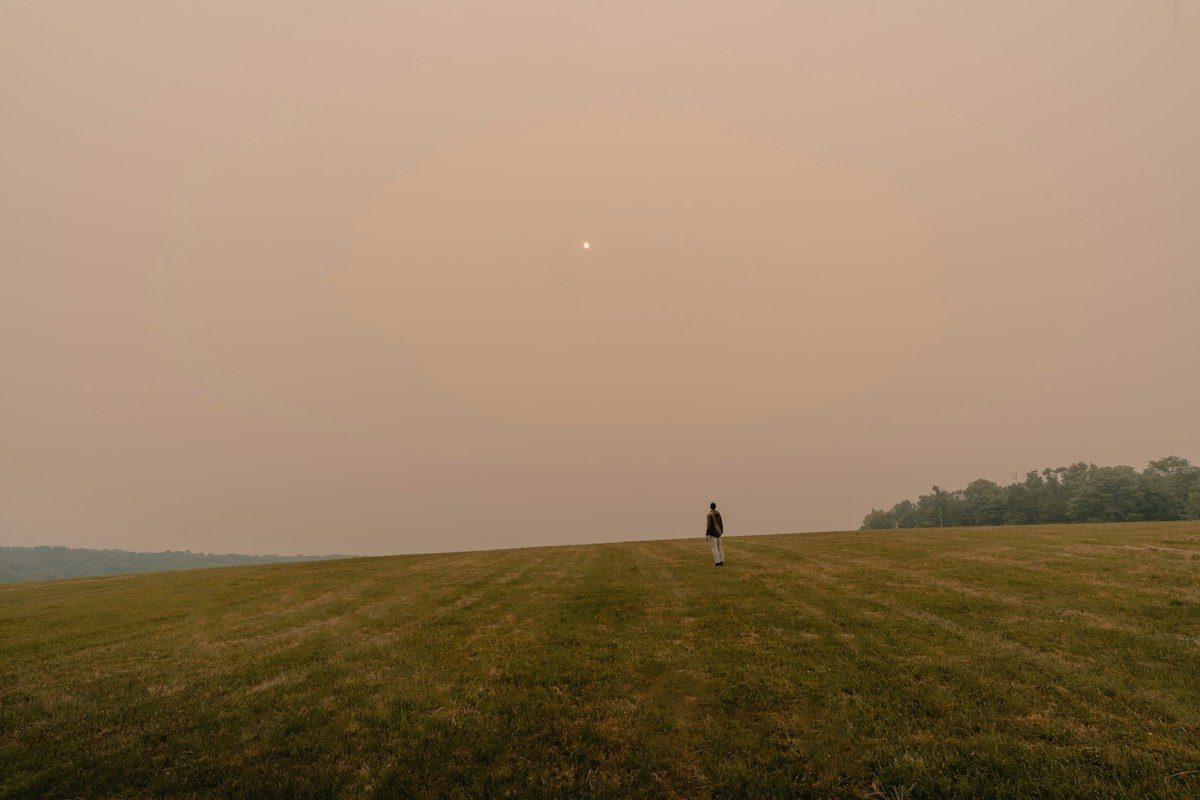
Illustrative stock photograph; not a CEI patient, treatment result or clinic equipment.
Prairie summers are meant for patios, lake weekends and long evenings outside. But on some days, the sky turns a hazy grey or orange, the sun looks like a red disc, and the air smells of smoke. Wildfire smoke can travel hundreds of kilometres, so even when the fires are far away, the smoke can settle over Saskatoon and communities across the province.
If your eyes burn, sting or water on smoky days, you’re not alone. Smoke is one of the most common causes of summer eye irritation. Here’s why it happens, how to find relief at home, and when to see an eye doctor.
Key Takeaways
- Wildfire smoke contains tiny particles and gases that irritate the surface of the eye, causing burning, redness, watering and a gritty feeling.
- Staying indoors with windows closed, using an air purifier and using lubricating eye drops can all help.
- Eye pain, light sensitivity, blurred vision that doesn’t clear, or symptoms that don’t improve when the air clears need an eye exam.
How Wildfire Smoke Affects Your Eyes
Wildfire smoke is a mix of gases and very fine particles. Your eyes are constantly exposed to the air, and the thin tear film that coats them is their main protection. When smoky air reaches your eyes, those particles and gases can irritate the surface and disrupt the tear film.
The result is often a type of irritation similar to dry eye. Common symptoms include:
- Burning or stinging
- Redness
- Watery eyes
- A gritty or sandy feeling
- Itchiness
- Mild blurry vision that clears when you blink
People who already have dry eye, allergies or wear contact lenses often notice symptoms sooner and feel them more strongly.
Relief Tips for Smoky Days
Stay Indoors When the Air Is Poor
On days with heavy smoke, spend more time indoors. Keep windows and doors closed. Check local air quality information, such as Environment and Climate Change Canada’s Air Quality Health Index, to help plan outdoor activities.
Clean the Air Inside
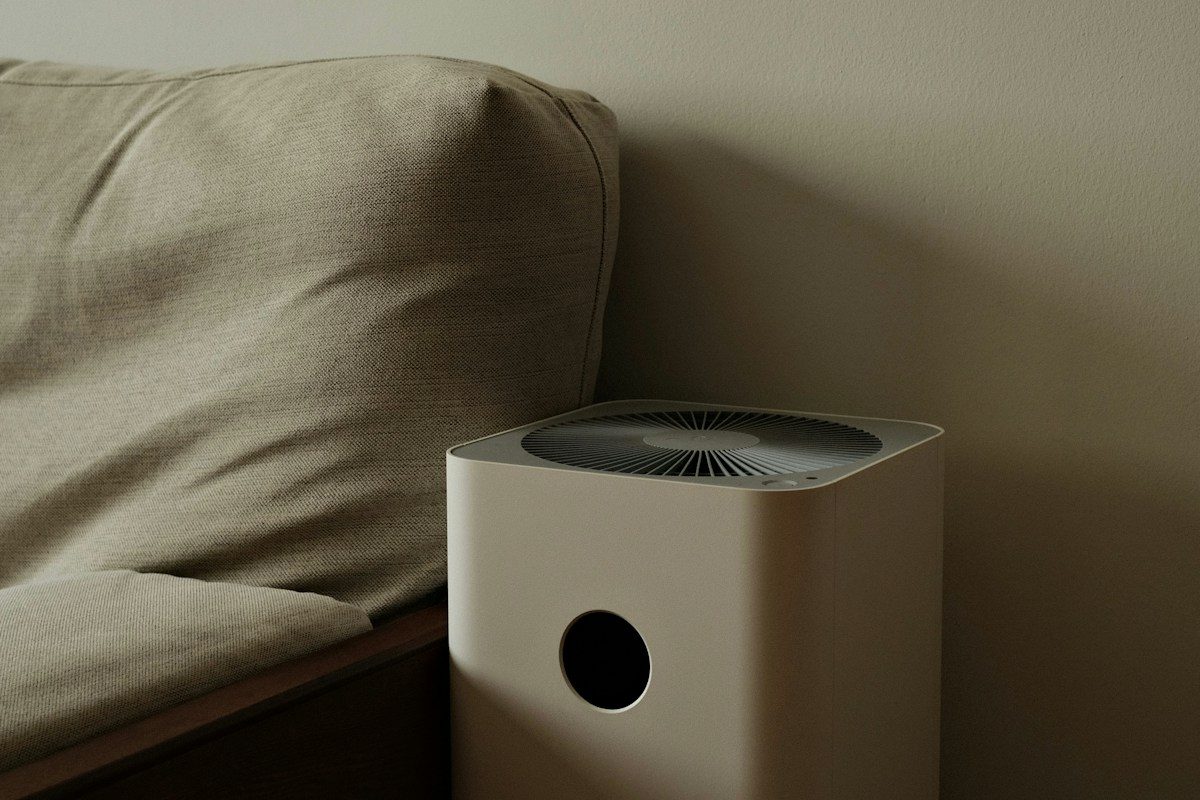
A portable air purifier with a HEPA filter can reduce smoke particles in a room. If your home has central air or a furnace fan, a good-quality filter can help too. Set your car’s ventilation to recirculate when driving through smoke.
Use Lubricating Eye Drops
Artificial tears help rinse particles from the surface of the eye and soothe irritation. Preservative-free drops are gentlest if you need them often. Avoid drops that promise to “get the red out.” They can cause rebound redness when used often and don’t treat the cause.
Try a Cool Compress
A clean, cool, damp cloth over closed eyes can ease burning and itching.
Give Contact Lenses a Break
Contact lenses can trap particles against the eye. On smoky days, consider wearing glasses instead, especially if your eyes already feel irritated.
Don’t Rub Your Eyes
Rubbing can scratch the surface of the eye and make irritation worse. Rinse with artificial tears instead.
Wear Glasses or Sunglasses Outside
If you need to be outside, glasses or wraparound sunglasses give your eyes a bit of a shield against smoke and ash.
Stay Hydrated
Drinking plenty of water helps your body, including your eyes, stay comfortable in hot, smoky weather.
When to See an Eye Doctor
Smoke irritation usually improves when the air clears. See your optometrist or an eye doctor if you have:
- Eye pain, rather than just irritation
- Sensitivity to light
- Blurry vision that doesn’t clear with blinking
- Thick discharge
- Symptoms in one eye only
- Symptoms that don’t improve after the smoke clears
- A feeling that something is stuck in your eye, such as a piece of ash
If you wear contact lenses and your eye becomes red and painful, take the lenses out and get seen the same day. For a serious eye injury or sudden vision loss, seek urgent care. After hours, our office voicemail directs callers to Saskatoon City Hospital at 306-655-8000 to ask for the ophthalmologist on call, or you can go directly to the nearest emergency department. In an emergency, you do not need to call us first.
Who Should Take Extra Care?
Some people are more sensitive to wildfire smoke in general, not just in their eyes. These include older adults, young children, pregnant people and anyone with heart or lung conditions. If you’re in one of these groups, follow public health advice on smoky days, and talk with your doctor about any concerns.
For people with ongoing dry eye, smoke season can be a good time to review your eye care routine. Our post on winter dry eye covers many tips that help year-round.
Frequently Asked Questions
Can wildfire smoke damage my eyes permanently?
For most people, smoke causes temporary irritation that clears when the air improves. If your symptoms don’t settle, or you have pain or changes in your vision, see an eye doctor.
Should I use allergy eye drops for smoke?
Smoke irritation isn’t the same as an allergy, so lubricating drops are usually the first choice. If you have both allergies and smoke irritation, ask your pharmacist, optometrist or doctor which drops are right for you.
Are air purifiers worth it for my eyes?
An air purifier with a HEPA filter can reduce smoke particles indoors, which can help both your eyes and your breathing on smoky days.
Is it safe to wear contacts during smoky weather?
Many people can, but contacts can make smoke irritation worse. Switching to glasses on smoky days is often more comfortable.
Book Your Consultation
If smoke has left your eyes sore, red or blurry and they aren’t improving, get them checked. For ongoing dry eye or other concerns, our team can help. Book your consultation: call our Saskatoon office at 306-244-4111, Monday to Friday, 7 am to 4 pm. Conlon Eye Institute is in the Medical Arts Building, 341-750 Spadina Crescent East, Saskatoon, SK S7K 3H3.
References
- Government of Canada. Health effects of wildfire smoke exposure. https://www.canada.ca/en/services/health/healthy-living/environment/air-quality/wildfire-smoke/health-effects-exposure.html — supports eye irritation as a common symptom, fine particles (PM2.5), poor air quality even without visible smoke, and higher-risk groups.
- American Academy of Ophthalmology. Wildfire Smoke and Burning Eyes: 5 Ways to Cope. https://www.aao.org/eye-health/tips-prevention/what-to-do-when-smoke-gets-in-your-eyes — supports staying indoors, artificial tears, avoiding rubbing and redness-relief drops, and seeing a doctor if symptoms persist.
- University of Utah Health. Wildfire Smoke Irritating Your Eyes? https://healthcare.utah.edu/healthfeed/2024/07/wildfire-smoke-irritating-your-eyes-heres-what-do — supports HEPA purifiers, cool compresses, wraparound glasses and seeking care if irritation lasts more than a few days or vision blurs.
About the Author

Dr. M. Ronan Conlon has practised ophthalmology in Saskatoon since 1994. He completed fellowship training in ocular pathology at Harvard University and in oculoplastic surgery at the University of Iowa. In 1996 he brought laser vision correction technology to Canada from Germany, and he specializes in oculoplastic surgery, LASIK, ASL (PRK) and refractive cataract surgery. With the establishment of the Conlon Eye Institute, Dr. Conlon has drawn on decades of experience in LASIK, RLE surgery, refractive cataract surgery, and oculoplastic surgery. He has also served as Head of Ophthalmology and Chief of Staff with the Saskatchewan Health Authority.
The information on this page should not be used in place of information provided by a doctor or specialist. To learn more, read our Privacy Policy and Editorial Policy pages.