
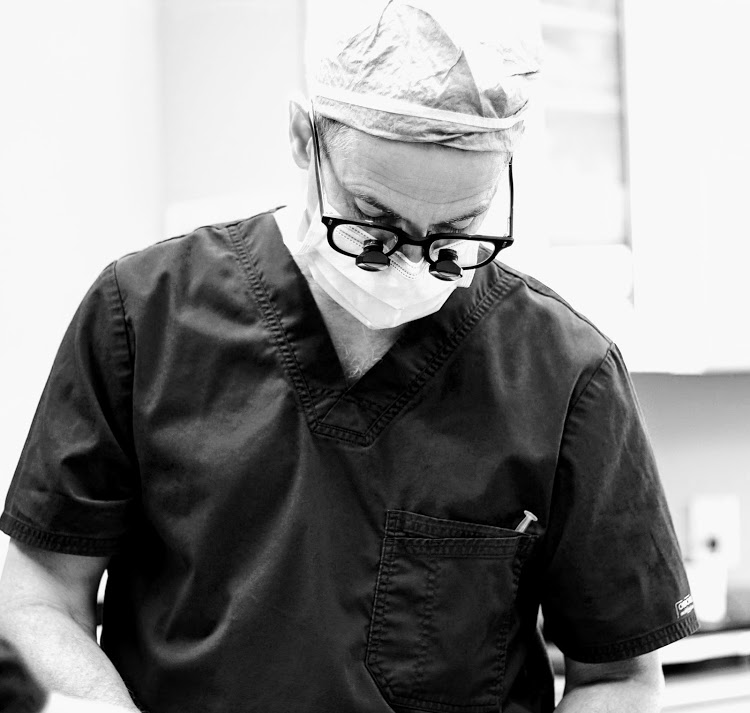
Illustrative stock photograph; not a CEI patient, treatment result or clinic equipment.
Thirty years is a long time in any career. In eye surgery, it spans several revolutions. When Dr. M. Ronan Conlon began practising ophthalmology in Saskatoon in 1994, laser vision correction was not yet widely available in Canada, and cataract surgery looked quite different from what patients experience now.
This fall, we’re marking three decades of Dr. Conlon’s practice in Saskatoon. It’s a chance to look back at how eye care has changed, and to say thank you to the patients, families, optometrists and staff who have been part of the journey.
Key Takeaways
- Dr. Conlon has practised ophthalmology in Saskatoon since 1994 and brought laser vision correction technology to Canada from Germany in 1996.
- Over 30 years, he has focused on oculoplastic surgery, LASIK, ASL (PRK) and refractive cataract surgery.
- Technology has changed enormously, but the heart of the practice hasn’t: careful assessments, honest advice and close teamwork with optometrists.
Where It Began
Dr. Conlon’s training gave him an unusually broad foundation. He completed fellowship training in ocular pathology at Harvard University, studying the diseases of the eye at a microscopic level. He also completed fellowship training in oculoplastic surgery at the University of Iowa, focusing on the eyelids, tear drainage system and the area around the eye.
When he settled in Saskatoon in 1994, he brought that combination of medical and surgical eye care to patients across the province.
Bringing Laser Vision Correction to Canada
In 1996, Dr. Conlon brought laser vision correction technology to Canada from Germany. At the time, reshaping the cornea with a laser to reduce dependence on glasses was a new idea for many Canadians.
Early laser vision correction treated the surface of the cornea. Today’s surface treatment is AdvancedSurf Laser (PRK). LASIK, which works under a thin flap in the cornea, followed and became a popular choice for many patients. You can read more about this history in our post on the evolution of LASIK technology.
How Eye Surgery Has Changed
Laser Vision Correction
Laser technology and the way we measure the eye have advanced steadily. A few of the biggest changes:
- All-laser (bladeless) LASIK. The corneal flap can now be created with a femtosecond laser rather than a blade. Learn more in our post on blade-free LASIK.
- Better mapping. Detailed scans of the cornea’s shape and thickness help screen out people who aren’t good candidates, which makes surgery safer.
- Wavefront technology. Measurements of how light travels through the eye help guide more personalized treatments.
- Comfort after surface laser. For ASL (PRK), modern drop therapy and a soft bandage contact lens greatly improve comfort for many patients. Healing and comfort still vary from person to person.
Cataract Surgery
Cataract surgery has changed just as much. Incisions are far smaller, recovery is quicker, and the lens implants are much more advanced. Today, patients can choose lenses that correct astigmatism or reduce the need for glasses at more than one distance. This is the idea behind refractive cataract surgery, which treats the cataract and the prescription at the same time. A related option, lens replacement (RLE), uses the same kind of implant for selected people who don’t yet have a cataract. Lens replacement (RLE) is not right for everyone, and a careful assessment comes first. Our post on refractive cataract surgery explains how it works.
Care After Cataract Surgery
Months or years after cataract surgery, some patients notice their vision becoming cloudy again. This is usually a secondary cataract, also called posterior capsule opacification, where the thin capsule holding the lens implant turns hazy. A short YAG laser treatment, done with numbing drops, makes a small opening in the cloudy capsule so light can pass through again. Vision often improves within a day or two. Like any procedure, it has some risks, which your ophthalmologist will explain.
Eyelid and Oculoplastic Surgery
Dr. Conlon’s oculoplastic training remains a big part of the practice, from eyelid surgery that improves vision to the care of eyelid lesions and skin cancers around the eyes.
Serving the Province
Beyond the clinic, Dr. Conlon has served as Head of Ophthalmology and Chief of Staff with the Saskatchewan Health Authority. That work has given him a broad view of how eye care is delivered across the province.
Working With Optometrists
Much of what makes eye care work in Saskatchewan happens through partnerships. Many optometrists share in patients’ follow-up care after surgery. This co-management can mean checkups closer to home while the surgical team stays informed. See our post on co-management to learn more.
What Hasn’t Changed
The lasers are faster and the lenses are more advanced, but some things are the same as in 1994. Every patient still deserves a careful assessment, a clear explanation and an honest recommendation, even when that recommendation is not to have surgery.
Frequently Asked Questions
How long has Dr. Conlon practised in Saskatoon?
Dr. Conlon has practised ophthalmology in Saskatoon since 1994.
What procedures does Conlon Eye Institute offer?
Our services include LASIK, ASL (PRK), cataract and refractive cataract surgery, lens replacement (RLE), YAG laser for secondary cataract, and cosmetic and functional eyelid surgery.
Is ASL (PRK) uncomfortable?
The eye is numbed during treatment. Afterward, modern drop therapy and a soft bandage contact lens greatly improve comfort for many patients. Some discomfort during early healing is still possible, and experiences vary.
Where is the clinic?
We’re in the Medical Arts Building, 341-750 Spadina Crescent East, in Saskatoon.
Book Your Consultation
Thank you for 30 years of trust. Whether you’re curious about LASIK or AdvancedSurf Laser (PRK), need cataract care, are considering RLE or have questions about your eyelids, we’d be glad to see you. Book your consultation: call our Saskatoon office at 306-244-4111, Monday to Friday, 7 am to 4 pm. Conlon Eye Institute is in the Medical Arts Building, 341-750 Spadina Crescent East, Saskatoon, SK S7K 3H3.
References
- Dr. M. Ronan Conlon approved author biography (clinic file author-bio.txt) — supports 1994 start in Saskatoon, Harvard and Iowa fellowships, 1996 laser technology from Germany, and Saskatchewan Health Authority roles.
- American Academy of Ophthalmology. What Is a Posterior Capsulotomy? https://www.aao.org/eye-health/diseases/what-is-posterior-capsulotomy — supports PCO definition, numbing/dilating drops, office procedure, vision improving in about 48 hours, and risks.
- Cleveland Clinic. YAG Laser Capsulotomy. https://my.clevelandclinic.org/health/procedures/yag-laser-capsulotomy-posterior-capsulotomy — supports outpatient laser for secondary cataract and uncommon complications.
About the Author
Dr. M. Ronan Conlon has practised ophthalmology in Saskatoon since 1994. He completed fellowship training in ocular pathology at Harvard University and in oculoplastic surgery at the University of Iowa. In 1996 he brought laser vision correction technology to Canada from Germany, and he specializes in oculoplastic surgery, LASIK, ASL (PRK) and refractive cataract surgery. With the establishment of the Conlon Eye Institute, Dr. Conlon has drawn on decades of experience in LASIK, RLE surgery, refractive cataract surgery, and oculoplastic surgery. He has also served as Head of Ophthalmology and Chief of Staff with the Saskatchewan Health Authority.
The information on this page should not be used in place of information provided by a doctor or specialist. To learn more, read our Privacy Policy and Editorial Policy pages.