
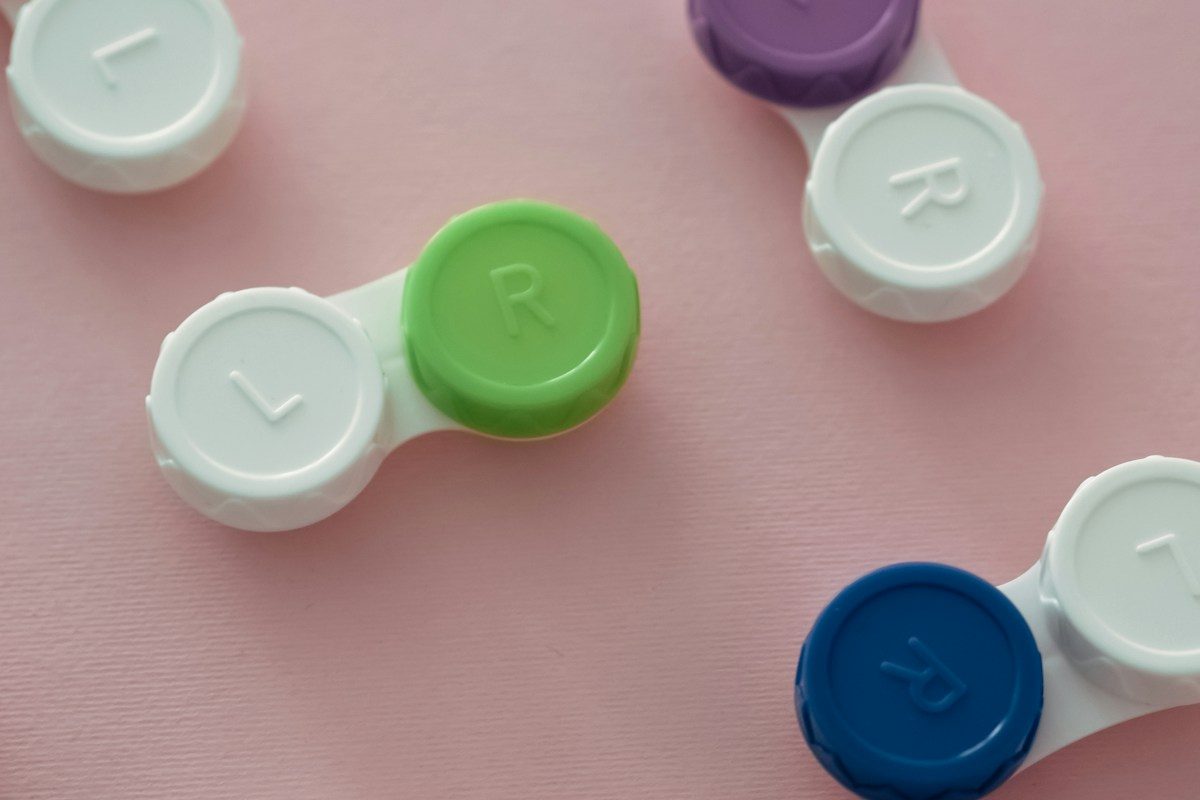
Illustrative stock photograph; not a CEI patient, treatment result or clinic equipment.
Contact lenses are a wonderful convenience. They’re great for hockey, skiing and those cold Saskatoon mornings when glasses fog up the minute you step inside. Used well, they’re safe for most people.
But contact lenses sit directly on the cornea, the clear front window of the eye. A few common shortcuts, like sleeping in lenses or wearing costume lenses bought without a fitting, raise the risk of a painful eye infection called a corneal ulcer. With Halloween around the corner, here’s what you need to know to keep your eyes safe.
Key Takeaways
- A corneal ulcer is an open sore on the cornea, often caused by infection. Sleeping in contact lenses is one of the biggest risk factors.
- Decorative or costume lenses carry the same risks as regular contacts. Get them properly fitted by an eye care professional, and never share them.
- Pain, redness, light sensitivity, blurry vision or discharge while wearing contacts needs same-day care. Take the lenses out and call an eye doctor.
What Is a Corneal Ulcer?
A corneal ulcer is an open sore on the surface of the cornea. Most are caused by an infection, which may be bacterial, fungal, viral, or caused by a tiny organism called Acanthamoeba. Doctors also call this infectious keratitis.
The cornea is usually very good at protecting itself. It has a tough outer layer and is constantly washed by tears. A contact lens can trap germs against the eye, reduce the oxygen the cornea receives and cause tiny scratches. That combination gives infection a chance to take hold.
Corneal ulcers can become serious quickly. Without prompt treatment, they can leave a scar that blurs vision, and in severe cases they can threaten sight.
How Corneal Ulcers Happen
Sleeping in Your Lenses
Sleeping in contact lenses, even for a nap, is one of the biggest risk factors for a corneal ulcer. The American Academy of Ophthalmology reports that it raises the risk of serious eye infection six- to eightfold. When your eyes are closed, less oxygen reaches the cornea, and germs have more time to settle in. This is true even for some lenses approved for overnight wear, so follow your eye care provider’s advice closely.
Wearing Lenses Too Long
Wearing daily disposables for several days, or stretching two-week or monthly lenses past their replacement date, lets deposits and germs build up on the lens.
Water and Contact Lenses
Tap water, lakes, pools and hot tubs can carry germs, including Acanthamoeba, that cause rare but serious infections. Don’t rinse or store lenses in water, and avoid swimming or showering in them.
Poor Lens Case Care
Topping up old solution instead of replacing it, letting the case stay damp, or using the same case for months all raise the risk.

Halloween Costume Lenses: What to Know
Cat eyes, glowing white lenses and vampire red can make a costume unforgettable. But decorative lenses are still contact lenses. Since 2016, Health Canada has regulated decorative lenses as medical devices, like corrective lenses, and they must be licensed before they can be sold.
The problems usually come from how they’re bought and worn:
- No fitting. Every eye is shaped differently. A lens that doesn’t fit properly can rub, scratch or starve the cornea of oxygen.
- No instructions. People who rarely wear contacts may not know how to clean, insert or remove them safely.
- Sharing lenses. Passing lenses to a friend passes on germs too.
- Overnight wear. After a late party, it’s tempting to fall asleep in them.
If you’d like decorative lenses, see your optometrist. They can check your eyes, fit the lenses properly and show you how to care for them. Buy lenses only with a valid prescription from an eye care professional, not from a costume shop, market stall or unverified website.

Warning Signs: Get Help the Same Day
If you wear contact lenses, take these symptoms seriously:
- Eye pain or a feeling that something is stuck in your eye
- Redness that doesn’t go away after removing the lenses
- Sensitivity to light
- Blurry vision
- Discharge or a lot of tearing
- A white or grey spot on the coloured part of the eye
If you notice any of these:
- Take your lenses out and leave them out.
- Don’t cover or patch the eye.
- Contact your optometrist or eye doctor the same day. After hours, our office voicemail directs callers to Saskatoon City Hospital at 306-655-8000 to ask for the ophthalmologist on call, or you can go directly to the nearest emergency department. In an emergency, you do not need to call us first.
- Bring your lenses and case with you. They may help identify the cause of an infection.
How Corneal Ulcers Are Treated
Treatment depends on the cause. Bacterial ulcers are usually treated with antibiotic eye drops, often used very frequently at first. Other causes need different medicines. Your eye doctor may take a small sample from the eye to identify the germ. You’ll usually be checked often until it’s healing well, and you’ll need to stay out of contact lenses until your eye doctor says it’s safe.
Safe Contact Lens Habits
- Wash and dry your hands before touching your lenses.
- Never sleep in your lenses unless your eye care provider has specifically said it’s okay.
- Replace lenses on schedule, and never stretch them.
- Use fresh solution every time. Never top up or reuse it.
- Keep lenses away from water: no tap water, swimming or showering in them.
- Rinse your case with solution, let it air-dry face down, and replace it regularly.
- Keep a pair of up-to-date glasses so you can give your eyes a break.
- See your optometrist regularly for contact lens checkups.
For more on protecting the cornea, see our post on corneal abrasion.
Frequently Asked Questions
Is it really that bad to nap in contacts?
Yes, it can be. Even short naps reduce oxygen to the cornea and raise the risk of infection. Take your lenses out before you sleep.
Are costume contact lenses legal in Canada?
Decorative lenses are regulated by Health Canada as medical devices. The safest way to wear them is to have them fitted and prescribed by an eye care professional.
Can I wear contacts if I have a red eye?
No. If your eye is red or irritated, take your lenses out. If the redness doesn’t settle quickly, or there’s pain or blurry vision, see an eye doctor the same day.
How long should I stay out of contacts after an infection?
That depends on how the eye heals. Your eye doctor will tell you when it’s safe to go back to lenses.
Book Your Consultation
A painful red eye while wearing contacts needs same-day care, not a routine appointment. For other questions about your corneas or eye health, our team can help. Book your consultation: call our Saskatoon office at 306-244-4111, Monday to Friday, 7 am to 4 pm. Conlon Eye Institute is in the Medical Arts Building, 341-750 Spadina Crescent East, Saskatoon, SK S7K 3H3.
References
- American Academy of Ophthalmology. Why You Should Never Sleep in Your Contact Lenses. https://www.aao.org/eye-health/tips-prevention/why-you-should-never-sleep-in-your-contact-lenses — supports six- to eightfold infection risk from sleeping in lenses, including naps and extended-wear lenses.
- Health Canada. Health Canada reminds Canadians of the risks of decorative contact lenses. https://recalls-rappels.canada.ca/en/alert-recall/health-canada-reminds-canadians-risks-decorative-contact-lenses — supports regulation since 2016, licensing, risks, no sharing, and removing lenses and seeking care for redness, blur, discharge or light sensitivity.
- Health Canada. Contact Lenses. https://www.canada.ca/en/health-canada/services/healthy-living/your-health/medical-information/contact-lenses.html — supports overnight wear raising corneal ulcer risk, no tap water, fitting by a professional, and seeking care for pain or blur.
About the Author
Dr. M. Ronan Conlon has practised ophthalmology in Saskatoon since 1994. He completed fellowship training in ocular pathology at Harvard University and in oculoplastic surgery at the University of Iowa. In 1996 he brought laser vision correction technology to Canada from Germany, and he specializes in oculoplastic surgery, LASIK, ASL (PRK) and refractive cataract surgery. With the establishment of the Conlon Eye Institute, Dr. Conlon has drawn on decades of experience in LASIK, RLE surgery, refractive cataract surgery, and oculoplastic surgery. He has also served as Head of Ophthalmology and Chief of Staff with the Saskatchewan Health Authority.
The information on this page should not be used in place of information provided by a doctor or specialist. To learn more, read our Privacy Policy and Editorial Policy pages.