
Illustrative stock photograph; not a CEI patient, treatment result or clinic equipment.
Most people who come to us for a LASIK consultation in Saskatoon are excellent candidates. A few aren’t, and one of the most important reasons is a condition called keratoconus. Some people find out they have it for the first time at their LASIK consultation.
Keratoconus can be hard to notice early, but corneal mapping can pick up subtle changes long before they’re obvious. Here’s what keratoconus is, how we screen for it, the early signs to watch for, and what your options are if you have it.
Key Takeaways
- Keratoconus is a condition where the cornea gradually thins and bulges into a cone shape, blurring and distorting vision.
- It usually starts in the teens or twenties. Frequent prescription changes and growing astigmatism can be early signs.
- Corneal mapping at a LASIK consultation can detect early keratoconus. LASIK can weaken the cornea further, so it isn’t recommended for people with keratoconus.
- If you have it, there are good options, from glasses and specialty contact lenses to treatments that can help slow it down.
What Is Keratoconus?
The cornea is the clear front window of your eye. Normally, it’s shaped like a smooth dome. In keratoconus, the cornea becomes thinner and weaker over time, and it starts to bulge outward into a cone. That irregular shape bends light unevenly, which blurs and distorts vision.
Keratoconus usually affects both eyes, although one may be worse than the other. It tends to begin in the teens or early adulthood and can progress for years before it stabilizes.
Who Gets It?
The exact cause isn’t fully known, but a few things are linked with keratoconus:
- Family history. It can run in families.
- Eye rubbing. Frequent, hard eye rubbing is strongly linked to keratoconus and may make it worse.
- Allergies and eczema. These often go along with itchy eyes and rubbing.
- Certain other conditions, including some connective tissue disorders.

Early Signs to Watch For
Early keratoconus can look like ordinary nearsightedness or astigmatism. Signs that might point to something more include:
- Prescription changes at almost every eye exam
- Increasing astigmatism
- Blurry or distorted vision, even with new glasses
- Ghosting or double images in one eye
- Streaks, halos or glare around lights at night
- Contact lenses that don’t fit well or feel uncomfortable
If this sounds familiar, mention it to your optometrist. They can arrange corneal mapping or refer you for a closer look.
How Corneal Mapping Works
Corneal mapping, also called corneal topography or tomography, creates a detailed colour map of the shape and thickness of your cornea. It takes only a few seconds. You rest your chin, look at a light, and a camera does the rest. Nothing touches your eye.
At a LASIK consultation, these maps are one of the most important tests we do. They show:
- The overall shape of the cornea, including any steepening or irregular areas
- How thick the cornea is, and where it’s thinnest
- Whether the front and back surfaces of the cornea look healthy
Why LASIK Isn’t Recommended for Keratoconus
LASIK reshapes the cornea by creating a flap and removing a small amount of tissue underneath. In a healthy cornea, that’s very safe. In a cornea already weakened by keratoconus, removing tissue can make it weaker still. That raises the risk of the cornea bulging further after surgery, a problem called ectasia, which can seriously affect vision.
That’s why people with keratoconus, or with corneal maps that suggest it, aren’t LASIK candidates. Some people with thinner but otherwise healthy, stable corneas may still be suitable for ASL (PRK), which has no flap. For suitable candidates, AdvancedSurf Laser (PRK) is safe and reliable, and modern drop therapy and a soft bandage contact lens greatly improve comfort for many patients, though experiences vary. But keratoconus itself is a different situation, and your surgeon will explain what’s safe for your eyes.
Options If You Have Keratoconus
Having keratoconus doesn’t mean you’re out of options. Treatment depends on how advanced it is and whether it’s changing.
- Glasses or soft contact lenses often work well early on.
- Specialty contact lenses, such as rigid gas permeable, hybrid or scleral lenses, can give much clearer vision when glasses no longer do. They create a smooth surface over the irregular cornea.
- Corneal cross-linking uses vitamin B2 (riboflavin) drops and ultraviolet light to strengthen the cornea. Its main goal is to slow or stop keratoconus from getting worse. It won’t reverse changes that have already happened, which is why early diagnosis matters.
- Corneal implants or a corneal transplant may be considered in more advanced cases.
Protecting Your Corneas
Whether or not you have keratoconus, a few habits help:
- Don’t rub your eyes. If they’re itchy, try a cool compress or lubricating drops.
- Treat allergies. Ask your family doctor or pharmacist about allergy treatments that help itchy eyes.
- Keep up regular eye exams, especially if keratoconus runs in your family.
Frequently Asked Questions
Can keratoconus be cured?
There’s no cure, but it can be managed well. Cross-linking can help slow or stop progression, and glasses, contacts or other treatments can give good vision.
Can I have laser eye surgery if I have keratoconus?
LASIK isn’t recommended for people with keratoconus, and surface laser isn’t a treatment for it either. Your eye doctor will discuss options that may be appropriate, such as specialty lenses or cross-linking.
Is keratoconus common?
It’s not rare, but it isn’t one of the most common eye conditions either. Many people have mild forms that are only found with corneal mapping.
Will keratoconus keep getting worse?
It often progresses through the teens and twenties, then tends to slow down or stabilize later in adulthood. Regular monitoring shows whether it’s changing.
Book Your Consultation
Corneal mapping is part of every laser vision correction assessment. If you’re wondering whether you’re a candidate, or you’ve been told your corneas need a closer look, our team can help. Book your consultation: call our Saskatoon office at 306-244-4111, Monday to Friday, 7 am to 4 pm. Conlon Eye Institute is in the Medical Arts Building, 341-750 Spadina Crescent East, Saskatoon, SK S7K 3H3.
References
- American Academy of Ophthalmology. What Is Keratoconus? https://www.aao.org/eye-health/diseases/what-is-keratoconus — supports definition, symptoms, specialty contact lenses, corneal cross-linking and transplant.
- American Academy of Ophthalmology. LASIK — Laser Eye Surgery. https://www.aao.org/eye-health/treatments/lasik — supports corneal shape/thickness screening and that keratoconus is a reason not to have LASIK.
- American Academy of Ophthalmology. What Is Photorefractive Keratectomy (PRK)? https://www.aao.org/eye-health/treatments/photorefractive-keratectomy-prk — supports surface treatment without a flap for some thinner corneas.
About the Author
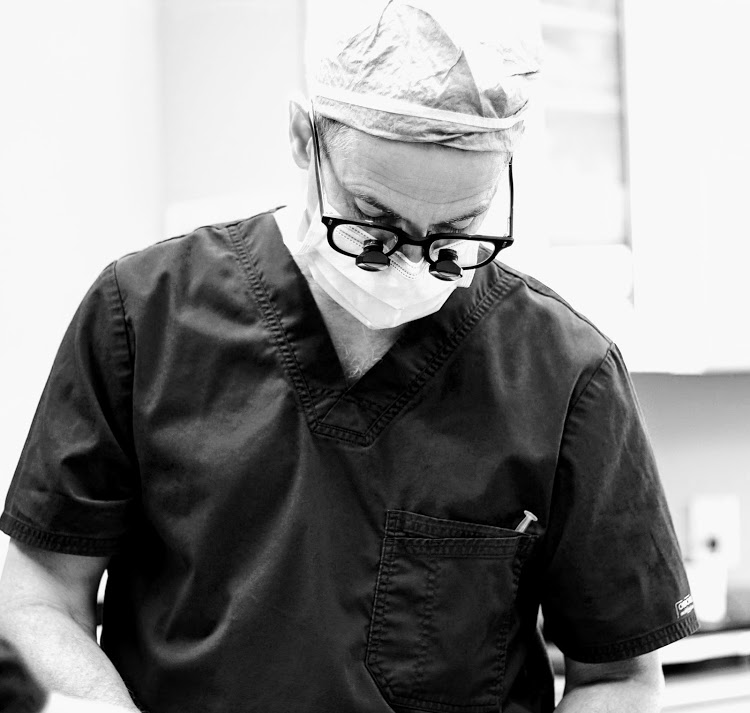
Dr. M. Ronan Conlon has practised ophthalmology in Saskatoon since 1994. He completed fellowship training in ocular pathology at Harvard University and in oculoplastic surgery at the University of Iowa. In 1996 he brought laser vision correction technology to Canada from Germany, and he specializes in oculoplastic surgery, LASIK, ASL (PRK) and refractive cataract surgery. With the establishment of the Conlon Eye Institute, Dr. Conlon has drawn on decades of experience in LASIK, RLE surgery, refractive cataract surgery, and oculoplastic surgery. He has also served as Head of Ophthalmology and Chief of Staff with the Saskatchewan Health Authority.
The information on this page should not be used in place of information provided by a doctor or specialist. To learn more, read our Privacy Policy and Editorial Policy pages.