

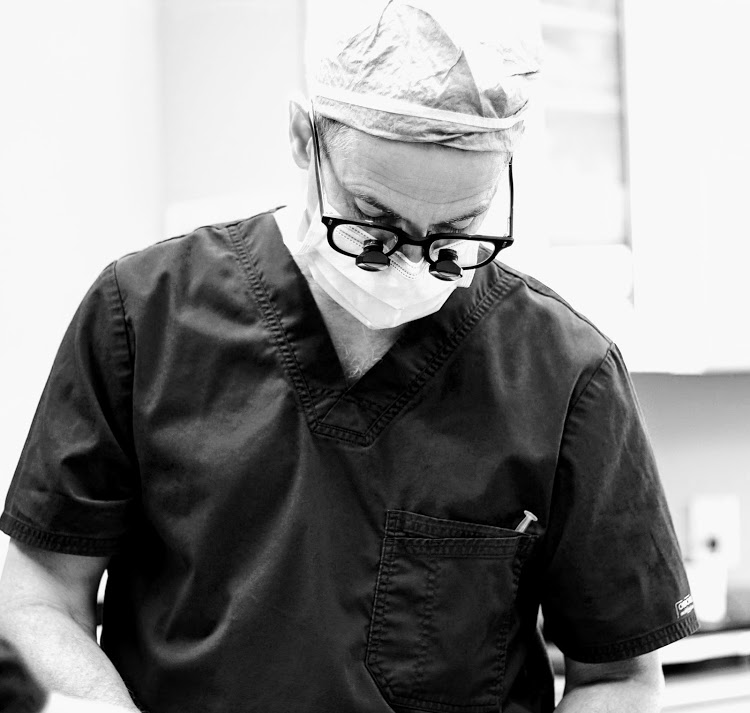
Illustrative stock photograph; not a CEI patient, treatment result or clinic equipment.
You look at a door frame and the edge seems to bend. Words on the page look smudged in the middle, or there’s a blurry spot right where you’re trying to look. Changes like these in your central vision can come from several eye conditions, including two that affect the macula: macular pucker and macular hole.
Both conditions are related to normal aging changes inside the eye, and both can be found with a dilated exam and a scan. This guide explains the difference, what to expect and when to get checked.
Key Takeaways
- The macula is the centre of the retina, responsible for sharp central vision.
- A macular pucker (epiretinal membrane) is a wrinkling of the macula; a macular hole is a small opening in it.
- Both can cause wavy, blurry or distorted central vision. Side vision is not affected.
- They’re diagnosed with a dilated eye exam and an OCT scan.
- Mild macular pucker may need no treatment. A macular hole is usually treated with surgery called vitrectomy.
- New wavy or distorted vision should be checked promptly, because other conditions, such as macular degeneration, can cause similar symptoms.
What Is the Macula?
The retina is the light-sensitive layer at the back of the eye. The macula is its small central area, which lets you read, recognize faces and see fine detail. To work properly, it needs to lie flat.
The inside of the eye is filled with a clear gel called the vitreous. As we age, the vitreous shrinks and pulls away from the retina. Usually this happens without problems. Sometimes, though, the vitreous sticks to the retina and causes changes in the macula.
Macular Pucker
A macular pucker, also called an epiretinal membrane, happens when scar tissue forms on the macula, causing wrinkles, creases or bulges.
Symptoms can include:
- Wavy vision, where straight lines look crooked
- Trouble seeing fine detail
- A grey, cloudy or blank area in central vision
Risk factors: Age is the most common. Other eye problems can also lead to macular pucker, including posterior vitreous detachment, a torn or detached retina, inflammation inside the eye, previous eye surgery, retinal blood vessel problems and diabetes.
Treatment: If symptoms are mild, you may not need treatment. An updated glasses prescription can sometimes help. Eye drops, medicines and laser don’t improve vision from a macular pucker. If symptoms are more serious, an ophthalmologist may recommend vitrectomy with membrane peeling, a surgery that removes some of the vitreous and the scar tissue so the macula can flatten. Vision often improves slowly, though it may not return to how it was before.

Illustrative stock photograph; not a CEI patient, treatment result or clinic equipment.
Macular Hole
A macular hole is a small, round opening in the macula. Like a pucker, it usually happens with age as the vitreous pulls on the macula. It can also follow swelling from other eye disease or an eye injury.
Symptoms can include:
- Blurry, wavy or distorted central vision
- A dark or blind spot in central vision as the hole grows
Treatment: Surgery called vitrectomy is the best way to treat a macular hole. The surgeon removes the vitreous that’s pulling on the macula and places a gas bubble in the eye to help the hole close. The bubble slowly disappears on its own.
After surgery, you may need to keep your head face-down or in a certain position for up to a week or sometimes longer. You can’t fly, travel to high altitudes or scuba dive until the gas bubble is gone, and you should tell any doctor or dentist about the bubble before other surgery. Vision improves as the hole closes, which can take several months. How much vision returns depends on the hole’s size and how long it was there.
Surgery Risks
Like all surgery, vitrectomy carries risks, including infection, bleeding in the eye, retinal detachment, raised eye pressure and cataract. Your surgeon will discuss the benefits and risks for your eye.
How Are They Diagnosed?
Your ophthalmologist will dilate your pupils to look at the retina, then take detailed pictures with optical coherence tomography (OCT), a scan that shows the layers of the macula. OCT helps tell a pucker from a hole and from other causes of distorted vision.
When to Get Checked
Book an eye exam soon if straight lines start to look wavy, or you notice a blurry or blank spot in your central vision.
Seek urgent care for sudden vision loss, a sudden shower of floaters, flashes of light, or a curtain or shadow across your vision. These can be signs of a retinal tear or detachment. After hours, our office voicemail directs callers to Saskatoon City Hospital at 306-655-8000 to ask for the ophthalmologist on call, or you can go directly to the nearest emergency department. In an emergency, you do not need to call us first.
Frequently Asked Questions
Will a macular pucker make me blind?
It affects central vision, not side vision. Many people have mild symptoms that don’t need treatment.
Can drops or laser fix a macular pucker?
No. They don’t improve vision from a macular pucker. Surgery is the option for more serious symptoms.
Can I fly after macular hole surgery?
Not until the gas bubble is gone. Your surgeon will tell you when it’s safe.
Is wavy vision always a pucker or hole?
No. Macular degeneration and other conditions can cause similar symptoms, so get it checked.
Book Your Consultation
If straight lines look wavy or your central vision has changed, our ophthalmologists can assess your eyes. Book your consultation: call our Saskatoon office at 306-244-4111, Monday to Friday, 7 am to 4 pm. Conlon Eye Institute is in the Medical Arts Building, 341-750 Spadina Crescent East, Saskatoon, SK S7K 3H3.
References
- American Academy of Ophthalmology. What Is a Macular Pucker? https://www.aao.org/eye-health/diseases/what-is-macular-pucker — supports definition (epiretinal membrane; wrinkles, creases or bulges), symptoms (wavy vision, trouble with details, grey/cloudy/blank area), no effect on side vision, age and vitreous changes as cause, risk factors (PVD, torn or detached retina, inflammation, previous surgery, retinal vessel problems, diabetes), dilated exam with OCT, no treatment for mild symptoms, updated glasses, drops/medicine/laser not improving vision, vitrectomy with membrane peeling, slow improvement possibly not to previous level, and surgery risks.
- American Academy of Ophthalmology. What Is a Macular Hole? https://www.aao.org/eye-health/diseases/what-is-macular-hole — supports definition, blurry/wavy/distorted central vision with a dark spot as it grows, no effect on side vision, age, swelling or injury as causes, dilated exam and OCT, vitrectomy with gas bubble as best treatment, face-down positioning up to a week or longer, no flying, high altitude or scuba diving with the bubble, telling doctors before other surgery, months of healing, recovery depending on size and duration, and risks (infection, bleeding, retinal detachment, raised pressure).
- National Eye Institute. Macular Pucker. https://www.nei.nih.gov/eye-health-information/eye-conditions-and-diseases/macular-pucker — supports wavy or distorted vision with straight lines looking bent, mild symptoms in many people with most needing no treatment, surgery when daily activities are affected, and that macular pucker differs from age-related macular degeneration despite similar symptoms.
- National Eye Institute. Macular Hole. https://www.nei.nih.gov/eye-health-information/eye-conditions-and-diseases/macular-hole — supports macular hole as an opening in the centre of the retina usually from age-related stretching or pulling, distorted or blurry straight-ahead vision with bent or wavy lines, a later blurred or blind spot, diagnosis by dilated exam and OCT, and surgery for most cases.
- National Eye Institute. Retinal Detachment. https://www.nei.nih.gov/eye-health-information/eye-conditions-and-diseases/retinal-detachment — supports sudden floaters, flashes and a curtain or shadow as emergency signs needing the eye doctor or emergency room right away.
About the Author
Dr. M. Ronan Conlon has practised ophthalmology in Saskatoon since 1994. He completed fellowship training in ocular pathology at Harvard University and in oculoplastic surgery at the University of Iowa. In 1996 he brought laser vision correction technology to Canada from Germany, and he specializes in oculoplastic surgery, LASIK, ASL (PRK) and refractive cataract surgery. With the establishment of the Conlon Eye Institute, Dr. Conlon has drawn on decades of experience in LASIK, RLE surgery, refractive cataract surgery, and oculoplastic surgery. He has also served as Head of Ophthalmology and Chief of Staff with the Saskatchewan Health Authority.
The information on this page should not be used in place of information provided by a doctor or specialist. To learn more, read our Privacy Policy and Editorial Policy pages.